
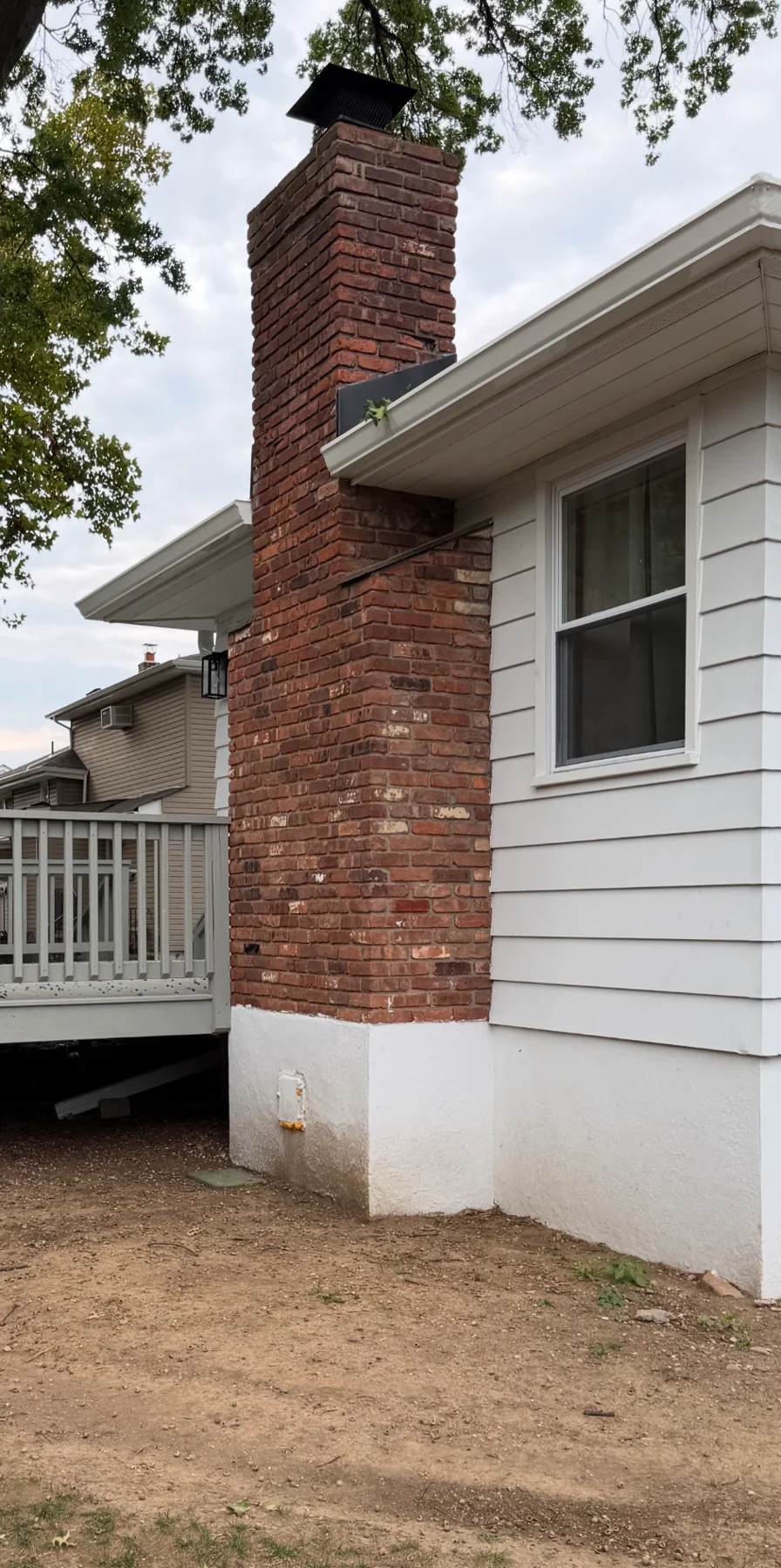
White marks on a brick chimney can raise two different questions: what is the deposit, and why did it appear? For Montclair homeowners preparing a wood-burning fireplace for the colder months, separating those questions helps avoid paying for a cosmetic treatment that leaves the underlying concern unresolved. Start with documentation and an inspection, not a bucket of sealer.
White does not automatically mean efflorescence
Efflorescence is a deposit left when moisture carrying dissolved salts reaches the masonry surface and evaporates. It often appears white and powdery. The deposit itself is usually harmless, but recurring marks deserve attention because they can reflect ongoing moisture movement. Newly completed masonry can also develop temporary deposits as construction moisture dries.
Other white marks can be lime deposits, cleaning-related residue or a different material altogether. The Brick Industry Association recommends identifying the material before selecting a cleaning method. A phone photograph is useful background, not proof of a particular defect or a reason to prescribe rebuilding.
Make a useful record from the ground
Before anyone cleans the surface, take a wide photo that shows the whole chimney and a zoomed photo of the marked area. Use a safe ground-level viewpoint; roof access is not a homeowner troubleshooting step. Repeat the same view after a wet period and after the masonry has had time to dry.
Give the inspector a short history rather than a guessed diagnosis. An old photo, a recent repair invoice or the date you first noticed an indoor stain can be more useful than the size of the white patch.
- When did the marks first appear, and are they spreading or returning?
- Were there recent crown, roof, mortar or cleaning repairs?
- Are there separate symptoms, such as dampness around the fireplace or staining beside the chimney indoors?
- Which side is affected, and does the pattern change after rain?
Ask for the water path, not just a coating
A useful inspection explains which accessible components were checked and which areas could not be assessed. Ask about the chimney top, masonry joints, roof intersection and any corresponding interior evidence. Do not assume that an indoor stain sits directly below the entry point.
Request photographs with the findings and a scope that distinguishes an observed defect from a suspected cause. If further investigation is needed, ask what it would establish before choosing a repair. For a fireplace that has not been used recently, also ask whether its interior needs evaluation before the next fire; exterior appearance alone does not establish readiness for use.
Why cleaning and sealing are separate decisions
Removing a deposit changes the surface appearance. It does not, by itself, identify or stop the moisture source. The Brick Industry Association advises correcting the causes of efflorescence before removal and does not recommend coatings as the sole control measure.
Avoid experimenting with acid cleaners. An unsuitable cleaning method can create additional staining or damage. Ask how the proposed product suits the brick and mortar, whether a test area is needed, and what preparation is required. For any proposed water-repellent treatment, ask what defects must be repaired first and how the chimney will be checked afterward.
What to ask before approving the work
A clear proposal should let you compare the same work across estimates. “Seal chimney” alone does not explain what is being repaired or how the result will be evaluated.
- What was identified, and what remains uncertain?
- Which repairs address moisture entry, and which items are cosmetic cleaning?
- What surfaces and components are included or excluded?
- What photos or follow-up observations will document the work?
Arrange a chimney assessment in Montclair
PB Chimney Services serves Montclair with chimney inspection, masonry repair and water-protection services. When you contact us, describe the marks and any separate leak or fireplace symptoms, and share the photos you took safely from the ground.
Use the request form below or call (862) 587-2214 to discuss an assessment. Sending a request is an inquiry, not a confirmed appointment. The right scope depends on the chimney’s condition, not on the color of a stain alone.
What to remember
- Identify the deposit before choosing a cleaner.
- Document changes and ask what the inspection actually established.
- Separate moisture repairs, cleaning and any protective treatment in the proposal.
This guide is general homeowner education. A site inspection, appliance information and local requirements determine the appropriate scope for a specific chimney.