
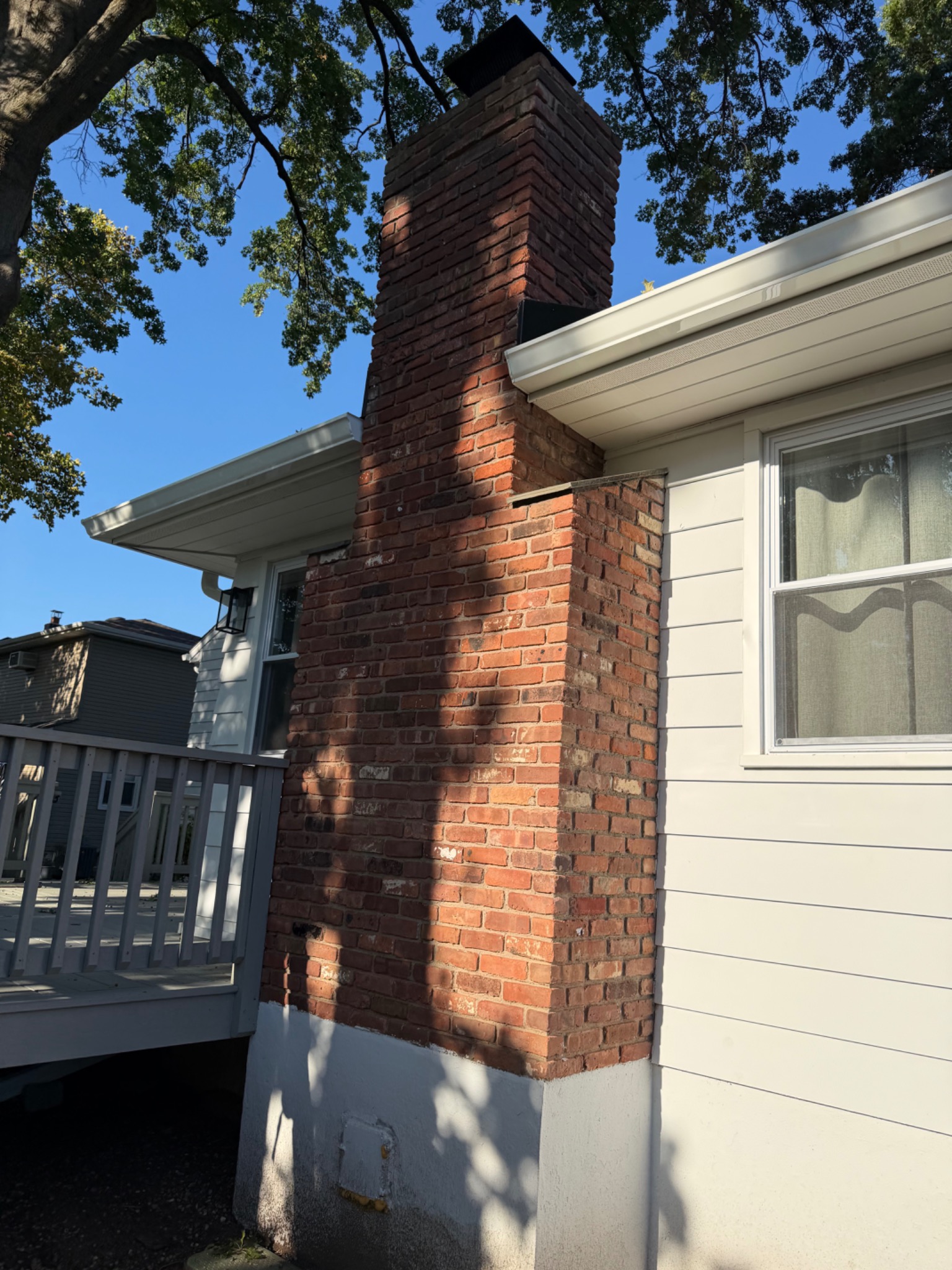
Missing mortar between chimney bricks does not automatically mean the whole chimney needs rebuilding. It also does not establish that a surface repair will be enough. For Hoboken homeowners comparing chimney masonry estimates, the useful distinction is where the deterioration ends: in the joints, in individual bricks or in a larger section of the structure.
When repointing may be enough
Repointing removes deteriorated mortar from joints and replaces it with compatible new mortar. It may be appropriate when the surrounding bricks and supporting masonry remain sound. A thin smear over loose material does not provide the same repair as preparing and filling the joints correctly.
Ask the inspector to identify the affected faces and height of the chimney. A proposal that says only 'repoint chimney' leaves open whether it covers a few upper courses, one exposed side or the entire accessible exterior. Marked photographs make that boundary easier to understand.
A fresh joint finish cannot establish the condition of a hidden flue. Exterior masonry repairs and an evaluation of the chimney's internal venting are related decisions, but they are separate parts of the scope.
When brick replacement or rebuilding enters the discussion
A brick that has lost material from its face cannot be restored simply by renewing the mortar around it. Selective brick replacement may be possible where damaged units are isolated and the surrounding masonry can remain. A partial rebuild may be considered when a larger area, such as the upper chimney courses, no longer offers a sound base for limited repairs.
Leaning, bulging, displaced bricks or cracks running through masonry need evaluation of their cause. They should not be treated as ordinary joint wear. The National Park Service identifies movement and several different deterioration mechanisms as reasons masonry can crack; the crack pattern alone is not a reliable homeowner diagnosis.
If a rebuild is recommended, ask where dismantling will stop and how the remaining masonry will be assessed. Also ask whether a structural specialist is needed. The estimate should distinguish an above-roof rebuild from work extending farther down the chimney.
- Worn joints with sound surrounding masonry: ask whether targeted repointing is appropriate.
- Isolated broken or flaking bricks: ask about replacing those units and repairing adjacent joints.
- Widespread deterioration or unstable masonry: request a defined repair or rebuild boundary.
- Leaning, displacement or falling material: keep people away from the affected area and arrange prompt professional assessment.
Match the mortar to the existing chimney
For an older brick chimney, mortar selection involves more than color. Strength, moisture movement, texture and the joint profile all matter. The National Park Service warns that mortar that is excessively strong or poorly matched to historic masonry can damage the masonry units.
Ask how the proposed mix was selected for the existing brick and mortar. A sample area can help establish the intended appearance before broad work begins. Do not assume a harder mix is always better, or that every older chimney needs the same mortar recipe.
Find the water path before closing the estimate
Deteriorated joints may be one part of a larger water problem. The chimney crown, cap, roof flashing and masonry surfaces all deserve attention. CSIA identifies these components in its guidance on reducing chimney water damage.
Ask which observed defect the proposed repair addresses. Repointing the sides does not repair an open roof-flashing joint. A new crown does not restore damaged bricks below it. A water-repellent treatment is not a structural repair and should not be expected to hold failing masonry together.
If staining or dampness returns after rain, record the timing and location. Share that history along with any previous leak repairs. It helps the inspector decide what to investigate without assuming the most visible stain marks the entry point.
Plan access, weather protection and the full scope
For a Hoboken property with limited roof access, a roof deck or nearby buildings, discuss how the work area will be reached and protected. Confirm any required building-management or neighboring-property coordination before scheduling. Access planning can be an important difference between two otherwise similar estimates.
Late-fall masonry work also needs a weather plan. The Brick Industry Association describes special preparation and protection for cold-weather construction. Ask how the selected mortar will be protected during placement and curing, including overnight conditions. A mild afternoon alone does not settle the question.
- Photos showing the findings and the exact area included in the work
- Whether the scope is repointing, brick replacement, a partial rebuild or a larger rebuild
- Proposed brick and mortar materials, finish expectations and any sample area
- Included crown, cap, flashing or liner work, with exclusions stated clearly
- Roof access, debris handling and protection for adjacent surfaces
- Weather protection, permit or inspection responsibilities when applicable, and any further assessment needed
- What happens if concealed deterioration is found after work begins
What to do before the visit
Take photographs only from a safe ground-level position or an existing safe indoor view. Do not climb onto the roof, probe joints or pull loose pieces from the chimney. Note when you first saw the damage and gather previous inspection or repair reports.
If the chimney appears unstable, material is falling or a recent event may have damaged it, keep the area clear and do not use the connected fireplace or appliance until qualified professionals have assessed safe use. Call emergency services if there is an immediate collapse hazard.
PB Chimney Services offers chimney masonry repair and inspections in Hoboken. Use the service-request form below or call (862) 587-2214 to discuss the visible concern and request an inspection. Appointment requests are subject to confirmation. A written recommendation should follow the findings at your property, rather than a repair choice made from a photograph alone.
What to remember
- Repointing repairs mortar joints; damaged bricks or unstable sections may require different work.
- A useful estimate explains the repair boundary, compatible materials and any water-entry repairs.
- Photos help document a concern, but they cannot establish structural or venting safety.
This guide is general homeowner education. A site inspection, appliance information and local requirements determine the appropriate scope for a specific chimney.