
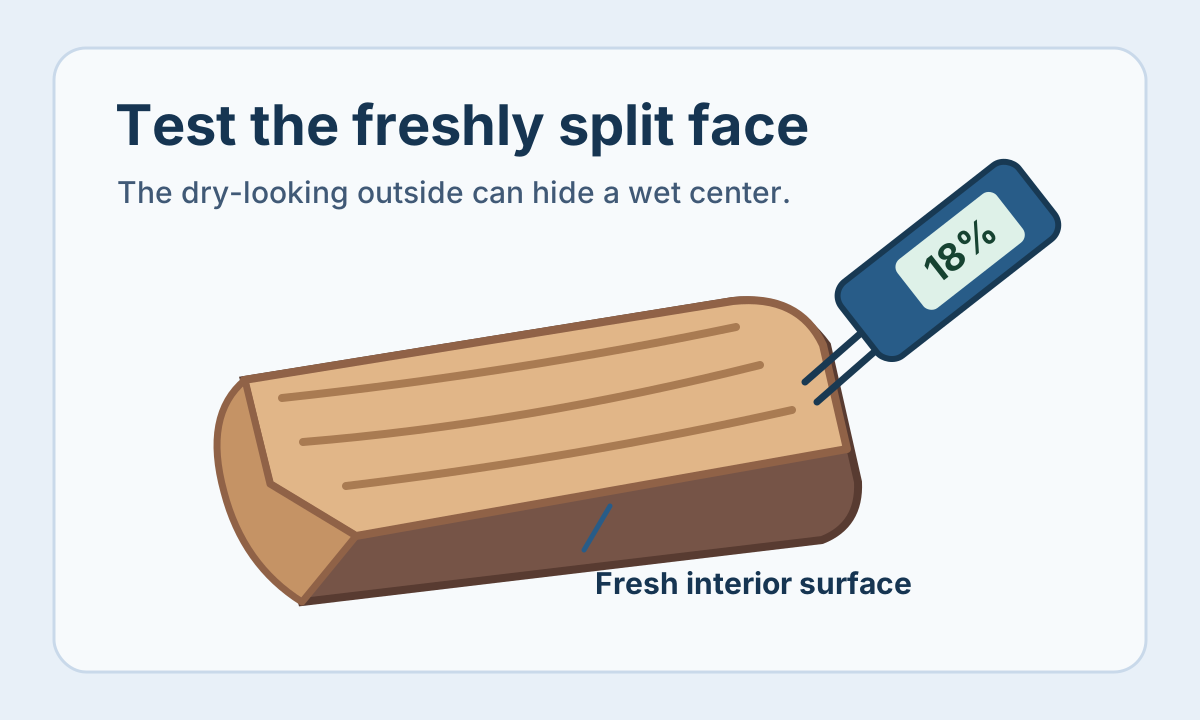
A stack can look dry on the outside and still be wet in the middle. Before lighting your wood-burning fireplace, split a few logs and check the exposed faces with a moisture meter. This guide is for Middletown homeowners who want a better way to check a delivery or sort through last season’s stack.
Test the inside of the log
Pick several pieces from different parts of your stack. Test at room temperature if possible and follow the meter’s directions for species and temperature settings. Split each sample and press the pins into the freshly exposed interior face, not the bark or the weathered end. Check more than one spot on that face.
The EPA recommends burning wood below 20% moisture. If some pieces read higher, set them aside to dry and test them again later. A dry reading from one piece doesn’t tell you the condition of the whole delivery.
Store it so air can move through the stack
Stack split wood outdoors off the ground, with the top covered and the sides open to airflow. EPA guidance recommends seasoning wood for at least six months; the actual time depends on the species, split size and storage conditions. Use the meter rather than the calendar to tell when it’s ready.
If you buy seasoned wood, ask when it was split and whether you can test a sample. Check the inside before moving a whole load into your ready-to-burn stack.
What if dry wood still smokes into the room?
Wet wood is only one possible cause of excess smoke. Indoor smoke can also point to a draft problem, a closed or faulty damper, or a blockage. If smoke keeps entering the room, stop using the fireplace and have the chimney checked rather than trying another load. If you suspect a chimney fire or your carbon monoxide alarm sounds, get outside and call 911.
Dry wood doesn’t remove existing deposits or tell you whether the flue is clear. If you don’t know when the system was last inspected, or smoke keeps backing up, request a chimney visit. Tell us when the problem happens, whether you have an open fireplace or an insert, and when the chimney was last serviced.
What to remember
- Test several freshly split interior faces instead of the ends of the logs.
- Use wood below 20% moisture; set wetter pieces aside and retest later.
- If smoke keeps entering the room, stop using the fireplace and have the system checked.
This guide is general homeowner education. A site inspection, appliance information and local requirements determine the appropriate scope for a specific system.