
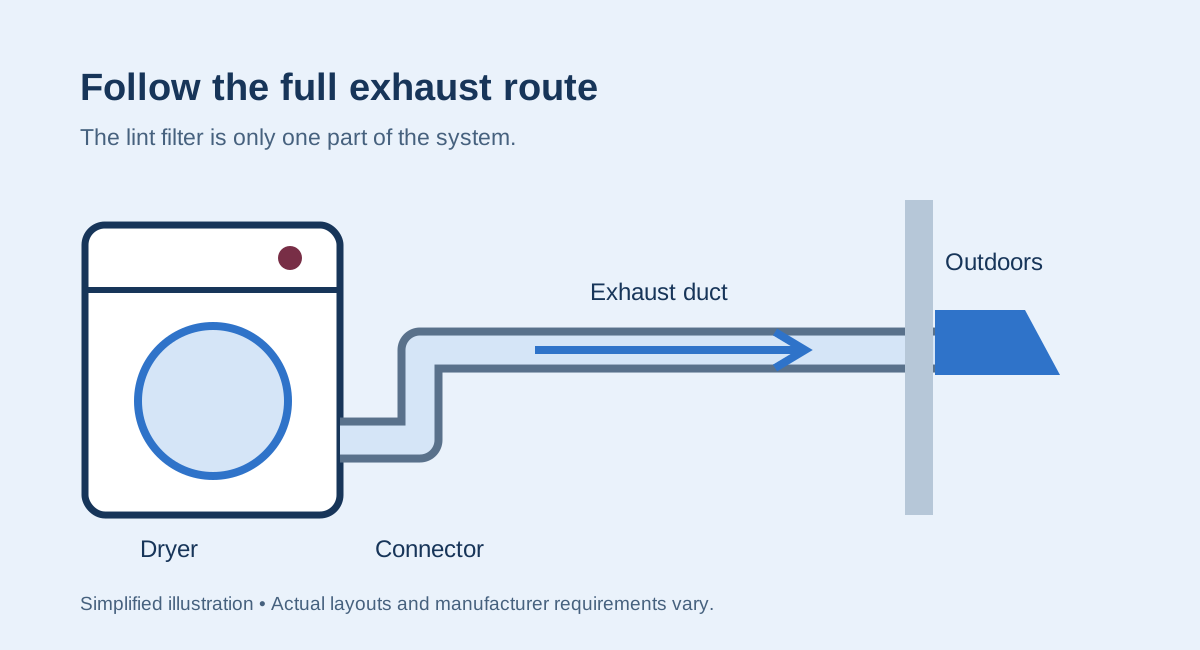
If a load that used to dry in one cycle now needs two, don't assume a new dryer is the answer. A restricted exhaust route is one possible cause, but the appliance and its installation also matter. For Upper Saddle River homeowners planning a service visit, the first step is to describe the change and identify where the dryer exhaust leaves the home.
A clean lint filter does not prove the duct is clear
The lint filter is only one point in the exhaust path. The U.S. Consumer Product Safety Commission warns that lint inside the dryer or exhaust duct can restrict airflow and contribute to overheating. Clothes staying damp after their usual cycle can be a sign of a blockage.
Clean the lint filter before or after every load. From a safe, accessible position, check whether air is leaving the outdoor outlet while the dryer runs. Little or no exhaust deserves attention. Do not climb onto a roof or dismantle the appliance to investigate. A clean filter cannot rule out a crushed connector or a restriction farther along the route.
When to stop instead of running another cycle
If there is smoke, a burning smell or unusual overheating, stop using the dryer. If you suspect a fire, leave the building and call 911 from outside. Do not keep running test loads to see whether the symptom clears.
The U.S. Fire Administration identifies failure to clean as a leading contributing factor in home dryer fires. Treat a noticeable change in drying performance as a maintenance issue to investigate, rather than something to work around by repeatedly extending the cycle.
Cleaning and repair are different jobs
Lint removal will not straighten a damaged duct. AHAM, the Association of Home Appliance Manufacturers, recommends checking the venting behind the dryer for crushed or damaged sections and following the appliance manufacturer's installation instructions. It recommends metal venting, an outdoor termination for conventional vented dryers, and a short, straight route where possible.
Ask the service provider to distinguish accumulated lint from a damaged connector, inaccessible section or outlet problem. A ventless condenser or heat-pump dryer is a different system; its filters and heat-exchange components need the maintenance specified in its own manual, not an assumed outdoor-duct cleaning.
What to send before a service visit
A few details help us plan access and avoid guessing at the scope. Photographs should be taken from the floor or ground without moving heavy equipment or disturbing connections.
- Dryer brand and model, plus whether it is vented or ventless
- Whether drying time changed suddenly or gradually
- A photo of the visible connector and outdoor outlet, if safely accessible
- Whether the outlet is on a wall or roof and whether the laundry is stacked or enclosed
- The approximate last cleaning date and any previous repairs
What a useful cleaning scope should explain
PB Chimney Services offers dryer exhaust cleaning, accessible connector replacement and exterior termination service. The written scope should identify the route being cleaned, access limitations and any repair proposed separately. Appliance-internal repair is a separate question from removing lint from the exhaust duct.
Ask what was found, which portions were accessible and how the outlet and airflow were checked afterward. If clothes still take too long to dry, do not assume repeated cleaning is the answer. The remaining concern may need an appliance technician or a review of the duct layout.
Plan maintenance around the dryer and its use
AHAM recommends annual professional cleaning of the appliance interior and venting, with attention sooner when drying times increase. Follow the specific dryer's care instructions as well. Keep its surrounding area clear of lint and clutter.
For a dryer vent visit in Upper Saddle River or our surrounding New Jersey service area, use the request form below and describe the symptoms and access. We can discuss the appropriate cleaning or evaluation scope before a visit; submitting a request does not confirm an appointment.
What to remember
- Long drying times can indicate restricted airflow, but they do not establish the cause.
- Clean the filter regularly and investigate changes in performance.
- Stop using a dryer that is smoking, smells burnt or overheats unusually.
- Ask what was cleaned, what could not be accessed and whether repairs are separate.
This guide is general homeowner education. A site inspection, appliance information and local requirements determine the appropriate scope for a specific system.