A cap and a damper can both sit at the top of a chimney, but they do different jobs. A cap protects the opening while leaving a path for exhaust. A damper opens or closes the fireplace’s vent path. For a Morristown homeowner deciding how to address a missing cap, cold air or worn fireplace controls, identifying the part and the problem is the first step toward a useful estimate.
What a chimney cap does
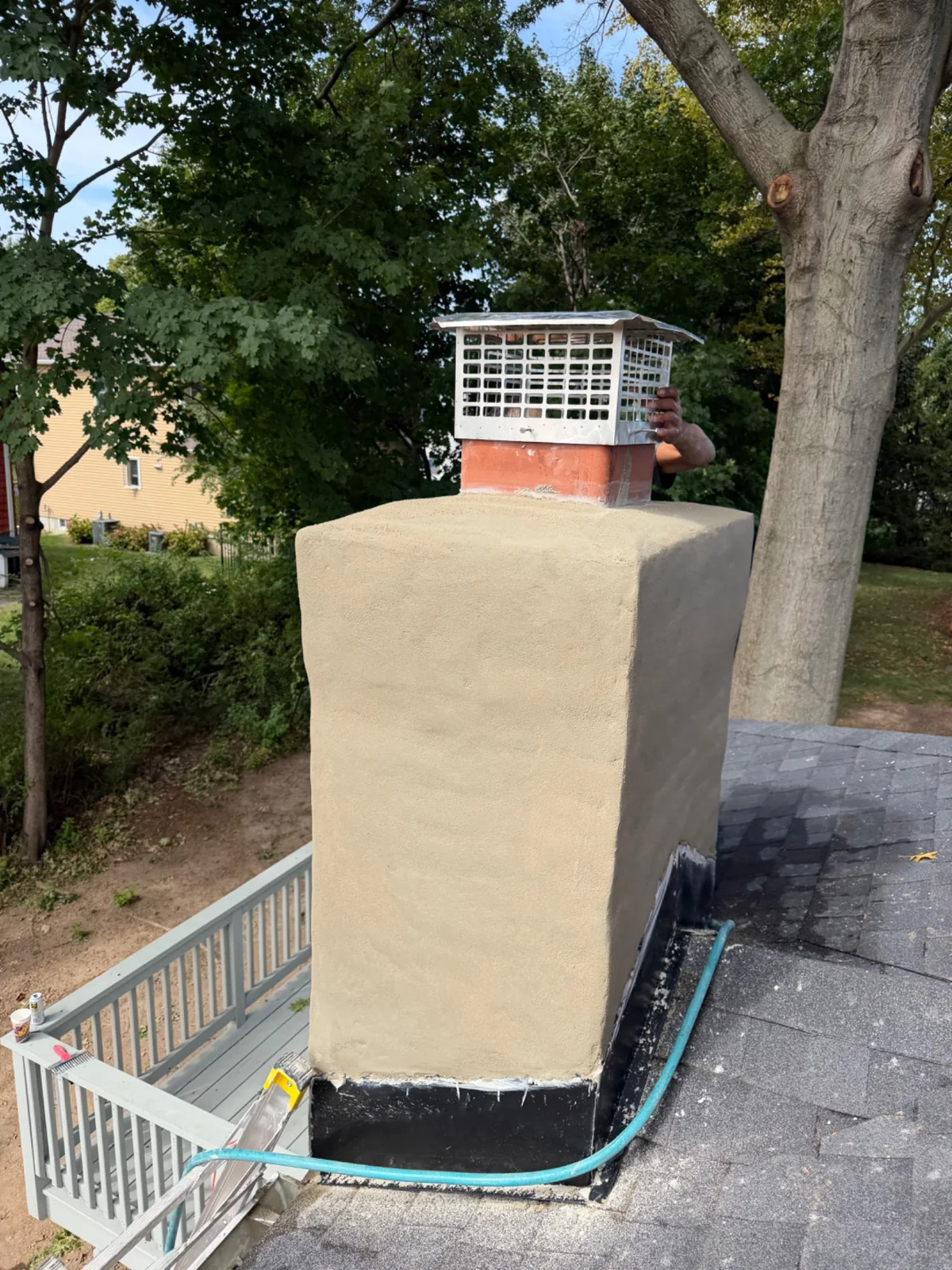
A typical masonry-chimney cap has a roof-like lid over the flue and screened sides around it. It helps limit direct rain, animal entry and debris while allowing combustion gases to leave. Some caps protect one flue; larger designs cover several openings. The photograph above shows a single-flue cap, not a documented damper mechanism.
An ordinary cap stays open around its sides. It does not create the closed seal a homeowner may want when an unused fireplace admits cold air. It also cannot repair cracked masonry, failed flashing or a damaged liner. Water around a chimney needs its entry path evaluated before a cap is assumed to be the solution.
Throat dampers and top-sealing dampers
A throat damper is the movable plate near the top of a traditional masonry firebox. A top-sealing damper sits at the flue’s upper opening and is typically operated by a cable and handle inside the fireplace. Both require correct operation so the vent path is open while the fireplace is in use.
When the fireplace is fully out and cold, a compatible top-sealing damper can close against a seal to reduce unwanted air movement through that flue. A rusty or warped throat damper may not close well, but cold air alone does not establish that a replacement damper is the right repair. The existing controls, flue and house-airflow conditions should be checked.
Some products combine a damper with a screened cap. Others require separate compatible protection. Ask which functions the proposed product provides when open and when closed. A top damper on one flue does not protect every opening on a multi-flue chimney.
Match the recommendation to the symptom
Describe what you have observed rather than ordering a replacement by appearance alone. A missing lid, a stiff handle and smoke entering a room are different concerns. A photo can help identify visible parts, but it cannot establish internal clearances, a complete seal or a clear flue.
- Missing, loose or visibly damaged cap: request an inspection of the attachment, flue top and appropriate replacement protection.
- Cold air at an unused fireplace: have the existing damper’s condition and operation checked before choosing a top-sealing model.
- Sticking handle, slack cable or uncertain opening: keep the fireplace unused until its operation is verified. Do not force the control.
- Debris or deposits on a screen: arrange professional evaluation and cleaning. Do not climb onto the roof or remove the screen yourself.
- Smoke entering the room: stop using the fireplace and arrange an inspection. A different cap is not a substitute for finding the cause.
Compatibility matters more than a universal fit
The cap must be supported by sound material and leave the required space for exhaust. Flue shape, tile condition, lid height, screen area and neighboring terminations all affect selection. A larger lid or a more expensive metal does not by itself establish a suitable installation.
These choices apply to compatible wood-burning masonry fireplaces. Other appliance flues and factory-built chimney systems require their own manufacturer-specified components. Do not add a closing device or substitute a termination without verifying the system and its instructions.
For a top damper, the scope should address its mounting surface, cable route, indoor handle and a clear demonstration of open and closed positions. If an existing throat damper remains, ask how both controls will be handled so one cannot unknowingly obstruct the fireplace. Future inspection and sweeping access should remain practical.
Questions to include in a written estimate
A useful proposal connects the observed condition to a specific product and installation method. Ask for the following details before approving work.
- Which fireplace and flue will this cap or damper serve?
- What inspection finding supports replacement, and is cleaning or masonry repair also needed?
- What manufacturer, model, material and dimensions are proposed?
- How are attachment, exhaust clearance and compatibility with nearby components verified?
- Does the product provide a rain lid, animal screen, closing seal or a combination?
- Are removal, mounting repairs, cable installation and operation checks included?
- How will the unit be accessed for later cleaning, and what maintenance does the manufacturer require?
Before the next fire
For an open wood-burning masonry fireplace, confirm that the damper is fully open before lighting. Follow the fireplace and damper instructions, and do not close the damper while a fire or hot embers remain. If you cannot verify normal operation, leave the fireplace unused and have it checked.
Caps and dampers still need inspection and maintenance. CSIA recommends annual inspection, with cleaning and repairs as needed. A newly installed top component does not establish that the rest of the chimney is ready for use. If a smoke or carbon monoxide alarm sounds, or you suspect a chimney fire, get everyone outside and call 911.
PB Chimney Services offers chimney inspections, caps and top-sealing damper services in Morristown. Use the service-request form below or call (862) 587-2214 to discuss your fireplace, the concern you noticed and your maintenance history. Requested appointment times are subject to confirmation. This article is general education for Morristown homeowners, not a report of a job performed there.
What to remember
- A cap protects an opening while remaining vented; a damper controls whether a compatible fireplace flue is open or closed.
- A combined cap-and-damper product must be selected for the actual fireplace and flue.
- Have uncertain operation, damage or smoke problems evaluated before the next fire.
This guide is general homeowner education. A site inspection, appliance information and local requirements determine the appropriate scope for a specific chimney.