Some New Jersey homes have a furnace and storage water heater connected to one masonry-chimney vent. That arrangement can be acceptable for certain compatible Category I appliances, but only when the complete venting system is permitted, correctly sized and installed for both appliances. Outlet diameter alone does not answer the question.
The short answer: sometimes, but not by assumption
A common vent combines the exhaust from two compatible appliances before the gases leave through one vent or chimney liner. A typical residential example is a Category I furnace and a draft-hood-equipped storage water heater. Whether they may share depends on the appliance listings, manufacturer instructions, adopted code, connector arrangement and calculated vent capacity.
The 2021 New Jersey residential fuel-gas provisions include sizing methods for Category I appliance venting systems and specifically address maximum combined appliance input for common vents. Those tables and rules use more than total BTU input. Vent height, connector rise, connector diameter, lateral length and whether an appliance is fan-assisted or draft-hood-equipped can change the permitted capacity.
A shared masonry chimney on the outside of the house does not prove that the appliances use the same flue. One chimney structure can contain separate liners, and each liner may serve a different appliance. The connections should be traced and documented before a proposal is prepared.
Start with both appliance labels and instructions
The furnace and water heater data plates identify fuel, input rating, model information and other details needed to determine the approved venting method. The installation manuals then describe the vent categories, materials, connector limits and configurations allowed for those exact appliances.
Category I equipment operates with nonpositive vent pressure and flue-gas temperatures that avoid excessive condensation under expected operation. That definition does not make every Category I appliance interchangeable. A fan-assisted furnace and a natural-draft water heater can affect a common vent differently, so the correct table and connector rules must be used.
High-efficiency or condensing equipment commonly uses a manufacturer-specified vent system instead of a conventional masonry-chimney liner. It should not be redirected into a chimney merely because an old opening is available. Oil equipment, solid-fuel appliances and fireplace flues also follow different requirements and should not be included in a gas common-vent calculation.
Why liner diameter cannot be guessed
A liner that is too small can restrict flow and contribute to spillage or back pressure. A liner that is too large can allow the exhaust to cool, weaken draft and promote condensation. DuraVent's DuraFlex AL instructions warn that improper sizing may cause draft-hood spillage, back pressure or corrosive condensation.
Simply matching the liner to the larger appliance outlet is not a universal sizing method. The proposed system should be checked against the appliance instructions and the applicable venting tables or an approved engineering method. When two appliances connect, the common section and each individual connector must be evaluated—not only the final liner diameter.
- Input rating and vent category of each appliance
- Draft-hood-equipped or fan-assisted operation
- Vertical vent height and available connector rise
- Horizontal connector length, fittings and offsets
- Connector diameters and the order in which they enter the common vent
- Chimney location, liner material and exposure to cold conditions
Replacing one appliance can change the venting problem
A new furnace can change how the remaining water heater vents even when the old system appeared to work. If the furnace is moved to a separate direct-vent system, the water heater may be left alone in a masonry flue that is too large for its smaller exhaust stream. Slow warm-up and cooling can increase condensation and draft concerns.
The opposite change also matters. Installing equipment with different input, vent-assist characteristics or connector size can move the existing common vent outside the range for which it was sized. An appliance replacement should include a review of the entire vent path, not just reconnection to the previous opening.
White deposits, damp masonry or corrosion can indicate moisture, but appearance alone does not identify the cause. Roof leaks, chimney-top defects and flue-gas condensation can overlap. The inspection should separate water-entry findings from vent-performance findings before recommending a liner or exterior repair.
Warning signs that need prompt attention
Exhaust odor, soot around a draft hood, melted plastic near a connector, corrosion, a loose connector or visible spillage are reasons to stop treating the system as routine. Do not tape over a gap, change a draft hood or reduce a connector as a homeowner repair. Those changes can interfere with listed appliance operation and conceal the evidence needed for diagnosis.
Carbon monoxide has no color or odor. The U.S. Consumer Product Safety Commission recommends CO alarms on every level and outside sleeping areas, installed according to the alarm manufacturer's instructions. If a CO alarm sounds, move everyone outside, call 911 and do not re-enter until emergency responders give permission. Do not operate an appliance identified as the source until it has been serviced.
- Soot, discoloration or heat damage near a draft hood or connector
- Exhaust odor, moisture or rust around the appliance or chimney base
- A connector that is loose, sagging, disconnected or visibly corroded
- Recurring condensation or white staining on chimney masonry
- A recent furnace or water-heater replacement without a venting review
- Any carbon-monoxide alarm activation
What a useful inspection and written scope should include
The inspection should identify each connected appliance, record its model and input rating, trace the connectors and establish whether the chimney contains one flue or several. Accessible connector condition, thimble entry, cleanout or base area, liner condition and top termination should be reviewed. Video scanning or expanded access may be appropriate when the flue cannot be evaluated from its openings.
A proposal for common venting should state which appliances the system will serve, the liner material and diameter, the sizing basis, connector changes, support and termination components, and any preparation or cleanout work. It should also identify permit or inspection responsibilities when applicable instead of making a broad claim that one size fits every home.
DuraVent and Selkirk both describe aluminum flexible liners for compatible Category I natural-gas or propane appliances. That product category is not a general-purpose liner for condensing equipment, oil heat or wood burning. The selected system's listing and installation instructions control the allowed fuel, components and assembly.
Safe information a homeowner can gather
Without removing panels or operating a malfunctioning appliance, photograph both data plates, the visible connectors and the point where each connector enters the chimney. Note whether the concern happens with one appliance, both appliances or after one was recently replaced. Provide the last service report when available.
Do not perform a smoke test, block a draft hood or light an appliance to recreate a spillage complaint. Combustion and draft testing belongs in a controlled professional evaluation with the correct instruments and appliance instructions.
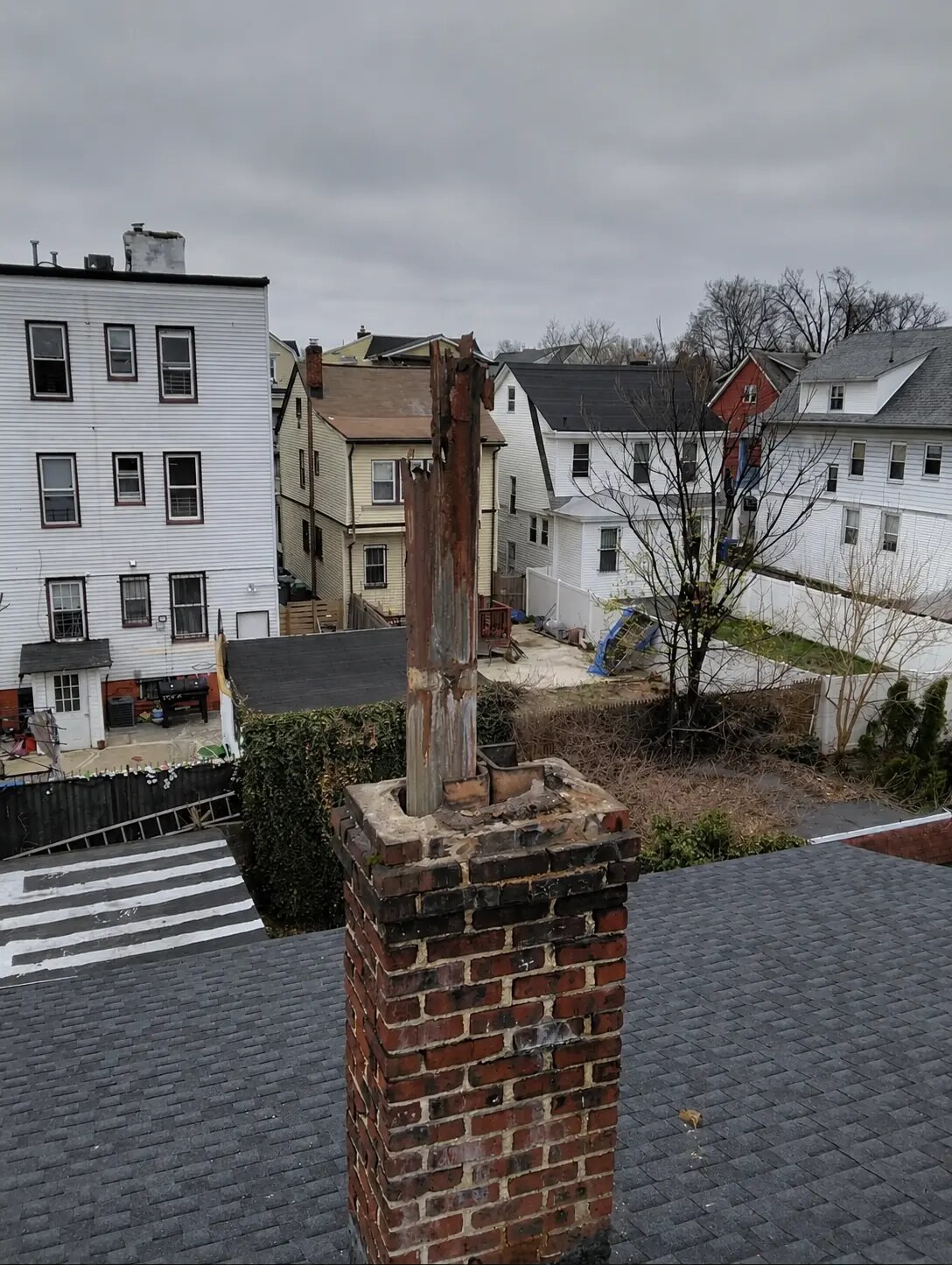
PB Chimney Services evaluates furnace and water-heater chimney liners across North and Central New Jersey. We serve homeowners in Upper Saddle River and surrounding areas; that town is a service area, not the location claimed for the project photograph used in this guide.
What to remember
- Compatible furnaces and water heaters may sometimes share a common vent, but the appliance instructions and a complete sizing method must allow it.
- Liner diameter depends on appliance inputs, vent categories, height and connector configuration—not the largest outlet alone.
- After either appliance is replaced, the remaining connectors, liner and termination should be reviewed as one venting system.
This guide is general homeowner education. A site inspection, appliance information and local requirements determine the appropriate scope for a specific chimney.